
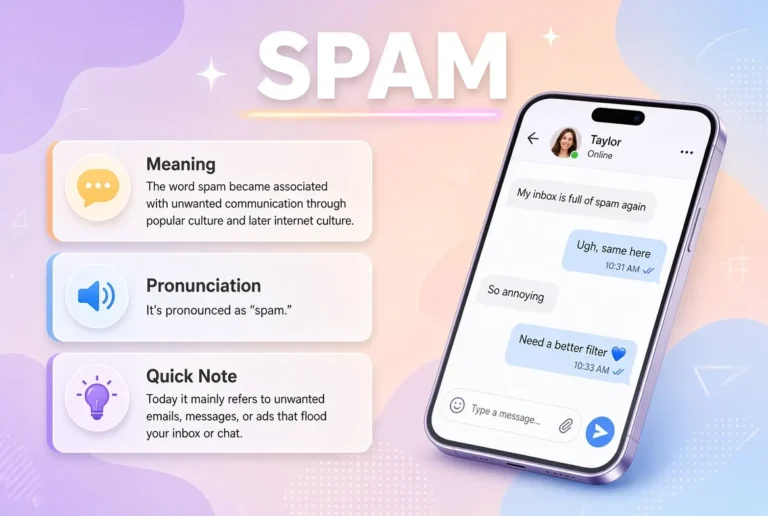
If you are wondering what does spam mean in text, the meaning usually depends on whether someone is describing a message or telling another person not to send too many messages.
Most commonly, spam means unwanted, repetitive, irrelevant, or excessive messages sent to someone.
For example, a person might say, “Stop spamming me,” because they are receiving many messages, notifications, links, photos, or repeated comments in a short time.
Spam can also refer to suspicious promotional messages, scams, automated messages, or unwanted advertisements.
On social media, however, friends sometimes use the word jokingly when someone sends many messages or repeatedly reacts to their posts.
The best way to understand the meaning is to look at what is being sent, how often it is being sent, and the tone of the conversation.
Quick Answer
Spam in text usually means unwanted, repetitive, excessive, or irrelevant messages. Someone may call a message “spam” because it contains advertising, suspicious links, repeated content, or simply because too many messages are being sent. Among friends, “spamming” can sometimes be used jokingly.
What Does Spam Mean in Text?
In texting, spam usually refers to messages that are sent repeatedly, unnecessarily, or without being wanted by the recipient.
Unlike many texting terms, spam is not an abbreviation or acronym. It is a regular English word that became strongly associated with unwanted electronic communication.
It is pronounced “spam”, rhyming with “ham.”
The tone can range from neutral to annoyed:
- Neutral: “That number keeps sending me spam.”
- Annoyed: “Please stop spamming my phone.”
- Playful: “Sorry, I’m spamming you with memes 😂.”
Text-message example
Alex: Why do I have 15 messages from you?
Sam: Sorry 😂 I was spamming you with photos from the concert.
In this example, spamming simply means sending a large number of messages or photos quickly.
Origin and Background of Spam
The word spam became associated with unwanted communication through popular culture and later internet culture.
The modern use of the word for unwanted electronic messages developed from the idea of something being repeated excessively and intrusively.
Over time, internet users began using spam for unwanted emails, advertisements, repeated posts, automated comments, and suspicious messages.
As texting and social media became more common, the word naturally expanded to include unwanted or excessive messages in chats.
Today, someone can describe both a single unwanted message and the repeated act of sending too many messages as spam.
How Spam Is Used in Text Conversations
Unwanted promotional or advertising messages
This is one of the most common meanings.
Person 1: Did you get that message about winning a free phone?
Person 2: Yeah, delete it. It’s probably spam.
Here, spam refers to an unwanted or possibly suspicious promotional message.
Sending too many messages
Someone may accuse another person of spamming when they send many messages quickly.
Jamie: sends eight messages in one minute
Taylor: Bro, stop spamming me 😭
Jamie: Okay okay, I’m excited!
This use can be playful or genuinely annoyed depending on the relationship and tone.
Repeated messages or content
Spam can involve sending the same message repeatedly.
Chris: WHY ARE YOU SENDING THAT GIF AGAIN?
Morgan: Because it’s funny.
Chris: That’s literally spam now 😂
Suspicious messages and links
Spam is often associated with messages from unknown people or automated accounts.
Message: Click here immediately to claim your prize!
You: Nope. That looks like spam.
In this context, spam may also be connected with scams, although spam and scams are not exactly the same thing. Some spam is merely annoying advertising, while scams are designed to deceive people.
Playful spamming between friends
Friends may intentionally “spam” each other with memes, selfies, emojis, or messages.
Friend: I’m going to spam you with cat videos tonight.
You: Please do 😂
The relationship and tone make this sound friendly rather than rude.
What Spam Means on Different Platforms
The basic meaning of spam remains fairly consistent across platforms, but the type of content can change.
On WhatsApp, spam often means:
- Repeated messages
- Unknown promotional messages
- Suspicious links
- Messages sent to many people or groups
Someone might also jokingly say, “Don’t spam the group,” when a person sends too many messages.
Snapchat
On Snapchat, spamming can mean sending:
- Many snaps in a short time
- Repeated chat messages
- Multiple reactions or notifications
Friends may use it casually, especially when sharing many photos from an event.
Instagram spam may include:
- Repeated DMs
- Promotional messages
- Repeated comments
- Automated comments
- Excessive likes or interactions
A friend might jokingly say, “You’re spamming my comments,” while a creator may use the word more seriously when dealing with unwanted accounts.
TikTok
On TikTok, spam can refer to:
- Repeated comments
- Promotional comments
- Copy-pasted messages
- Excessive posting in a comment section
People may also say “spam the comments” when encouraging lots of comments, although this usage can be playful and context-specific.
Spam on Facebook often refers to unwanted advertisements, suspicious links, repeated posts, or unwanted messages from unknown accounts.
Discord
On Discord, spamming commonly means sending too many messages, emojis, GIFs, or repeated content in a channel.
Many communities have rules against message spam because it can make conversations difficult to follow.
Dating Apps
On dating apps, spam often refers to:
- Automated messages
- Repeated copy-paste introductions
- Promotional links
- Suspicious accounts
- Someone sending excessive messages
If someone you barely know sends the same message repeatedly, calling it spam is usually negative.
What Does Spam Mean From a Girl or Guy?
The meaning of spam does not automatically change depending on whether the sender is a girl or a guy. The important factors are the relationship, conversation history, punctuation, emojis, and overall tone.
For example:
“Stop spamming me.”
This could mean:
- Genuine annoyance
- Playful teasing
- A request for space
Compare it with:
“Stop spamming me 😂😂”
The laughing emojis may suggest playful teasing.
However:
“Please stop spamming me.”
This sounds more serious and should generally be respected as a clear request to stop sending excessive messages.
If the relationship is romantic or flirtatious, sending many messages might show excitement, but that does not automatically mean the other person enjoys it. Always pay attention to the recipient’s responses and boundaries.
Other Possible Meanings of Spam
The most common texting meaning is unwanted or excessive digital messages, but the context can slightly change the interpretation.
| Meaning | Context | Example |
|---|---|---|
| Unwanted messages | Unknown senders or advertising | “I keep getting spam from random numbers.” |
| Excessive messaging | Personal conversations | “Stop spamming my phone 😭.” |
| Repeated content | Same message, emoji, GIF, or comment | “You spammed the same meme five times.” |
| Unwanted online activity | Comments, groups, or servers | “The account was removed for spamming.” |
| Playful message overload | Friends sharing lots of content | “I’m about to spam you with vacation pics 😂.” |
The most common meaning in texting is unwanted or excessive messages.
How to Respond to Spam
Your response should depend on whether the person is joking, sending too many messages, or whether you are dealing with suspicious communication.
Casual
Them: Sorry, am I spamming you?
You: Haha, you’re good. I don’t mind.
Funny
Them: I’m going to spam you with memes.
You: My phone is ready for the attack 😂.
Friendly but clear
Them: sends many messages
You: Haha, slow down a little—I can’t keep up 😅.
Serious boundary
Them: Why aren’t you replying?
You: Please don’t keep sending repeated messages. I’ll reply when I can.
Confused
Them: Stop spamming.
You: Wait, what do you mean? Am I sending too many messages?
Responding to suspicious spam
Friend: I got a weird link from an unknown number.
You: Don’t click it. It sounds like spam.
If you accidentally spammed someone
You: Sorry for the message spam 😅 I got excited and sent everything at once.
Similar Texting Terms and Differences
| Term | Meaning | Key Difference |
|---|---|---|
| Spam | Unwanted, repetitive, or excessive messages | Can describe both annoying messages and suspicious content |
| Flooding | Sending many messages very quickly | Usually focuses specifically on message volume |
| Blowing up my phone | Sending many messages or calls | More informal and often refers to a personal conversation |
| Scam | A deceptive attempt to steal money or information | A scam is malicious; not all spam is a scam |
| Bot message | Automated message | May be spam, but specifically comes from an automated system |
Common Misunderstandings
One common misunderstanding is assuming that every spam message is a scam. While many suspicious messages can be both spam and scams, ordinary spam may simply be unwanted advertising or repetitive content.
Another misunderstanding is believing that spamming always means something malicious. Among friends, someone may jokingly say they are “spamming” another person with photos, memes, or messages.
Capitalization does not usually change the meaning:
- spam
- Spam
- SPAM
However, SPAM can sometimes refer to the well-known canned meat product when the context is about food rather than messaging.
The phrase “don’t spam” can also be misunderstood if tone is ignored. It may be a joke, but if someone repeatedly asks you to stop, it should be taken seriously.
Is Spam Appropriate or Safe to Use?
The word spam itself is generally informal but not offensive. It is widely understood in personal conversations, social media, online communities, and everyday digital communication.
However, deliberately spamming someone can become annoying or disruptive, especially when you repeatedly send messages after they ask you to stop.
Be particularly careful with unknown messages containing:
- Unexpected links
- Requests for passwords or personal information
- Fake prizes
- Urgent threats or pressure
- Requests for money
- Suspicious downloads
Do not assume every spam message is harmless. If a message from an unknown sender appears suspicious, avoid clicking links or sharing personal information.
In a workplace, describing unwanted emails as “spam” is generally acceptable, although more formal language such as “unwanted messages” or “unsolicited emails” may be better in professional communication.
Examples of Spam in Text
- “Why is this random number sending me so much spam?”
- “Sorry for spamming your phone with pictures 😂.”
- “Please don’t spam the group chat while everyone is sleeping.”
- “That message says I won money, but it looks like spam.”
- “You sent the same emoji 30 times. That’s definitely spam 😭.”
- “My inbox is full of promotional spam again.”
- “I’m not ignoring you—I just can’t answer ten messages at once.”
- “Don’t click that link. It could be spam or something worse.”
- “She wasn’t angry; she was joking about me spamming her with memes.”
- “The Discord moderator warned him for spamming the channel.”
- “I accidentally spammed everyone with the same photo.”
- “If you keep sending the message after they ask you to stop, it stops being funny and becomes annoying.”
Frequently Asked Questions
Does spam mean someone is annoying you?
Sometimes. If someone says, “You’re spamming me,” they may mean you are sending too many messages, notifications, or repeated content. The tone matters, though. Friends may say it jokingly, while a serious request to stop should be respected.
Is spam the same as a scam?
No. Spam and scams can overlap, but they are different. Spam is generally unwanted or excessive communication. A scam is specifically designed to deceive someone, often to steal money, personal information, or account access.
What does “stop spamming me” mean in text?
It usually means stop sending so many messages or repeatedly sending content. The person may be joking or genuinely annoyed. Look at punctuation, emojis, previous conversation, and whether they continue engaging with you.
What does “spam me” mean?
“Spam me” can mean send me lots of messages, photos, memes, or other content. Among friends, it is often an invitation rather than a complaint. For example, “Spam me with concert pictures!” means “Send me lots of concert pictures.”
Is spamming someone rude?
It can be. Sending many messages without considering the other person’s time may be annoying, especially after they ask you to stop. However, friends may mutually enjoy sending lots of memes, photos, or messages, so consent and context matter.
Can a spam text be dangerous?
Some spam texts are harmless advertisements, but others may contain phishing attempts, scams, or malicious links. Be cautious with unexpected messages, particularly those creating urgency or asking for passwords, verification codes, money, or personal details.
Conclusion
In texting, spam most commonly means unwanted, repetitive, or excessive messages.
It can describe suspicious advertisements and unknown messages, but it can also simply mean sending too many texts, memes, photos, or emojis.
Context determines whether the word is serious, annoyed, or playful. If someone says you are spamming them, pay attention to their tone and whether they want you to slow down.
When dealing with unknown spam, avoid suspicious links and requests for personal information.

I am Ava Richardson, a passionate language writer who loves making English words and their meanings simple and easy to understand.
I create clear definitions, useful examples, and practical explanations to help readers improve their English vocabulary.